Proton e.MAS 5 vs BYD Atto 1 vs Nammi Box: Can Proton Change the EV Game?



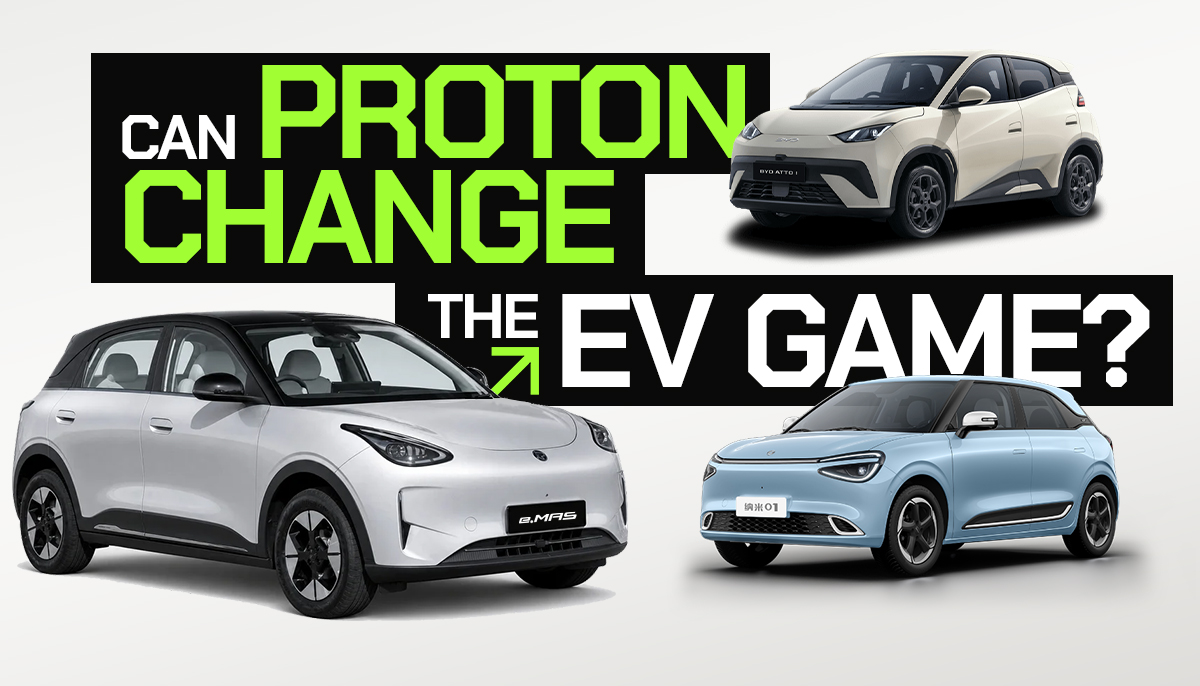
The battle for Nepal’s affordable EV market has entered a new chapter.
When the Dongfeng Nammi Box arrived in Nepal, it quickly attracted attention with its futuristic styling, premium features, and a package that challenged expectations in the compact EV segment.
Soon after, the BYD Atto 1 entered the market, bringing BYD’s strong EV reputation, proven battery technology, and an aggressive price positioning that made it one of the most talked-about city EVs in Nepal.

But now, a new challenger has entered the race — and it is bringing a completely different approach.
The Proton e.MAS 5, launched by Jagdamba Motors, is not just aiming to compete on price. It is trying to redefine what buyers should expect from an EV in the Rs. 30–35 lakh segment.

Starting at an introductory price of Rs. 29.99 lakh, the e.MAS 5 comes equipped with features rarely seen in this category, including a Rear-Wheel-Drive (RWD) architecture, multi-link independent rear suspension, a large 14.6-inch HD infotainment display, Level-2 ADAS, and a practical 70-litre front trunk (frunk).
On paper, Proton appears to have brought premium-segment technology into an affordable EV package. But specifications alone do not decide the winner.
Can the Proton e.MAS 5 challenge the Nammi Box’s distinctive design and the BYD Atto 1’s battery technology and brand strength? Or have the existing players already set the benchmark?
We compare the Proton e.MAS 5, BYD Atto 1, and Dongfeng Nammi Box across dimensions, performance, features, safety, and pricing to find out which EV offers the strongest value in Nepal’s competitive sub-Rs. 35 lakh segment.
Note: Features and equipment mentioned throughout this comparison may vary depending on the variant.
Dimensions
From road presence and wheelbase to ground clearance and storage, each EV takes a different approach to practicality.
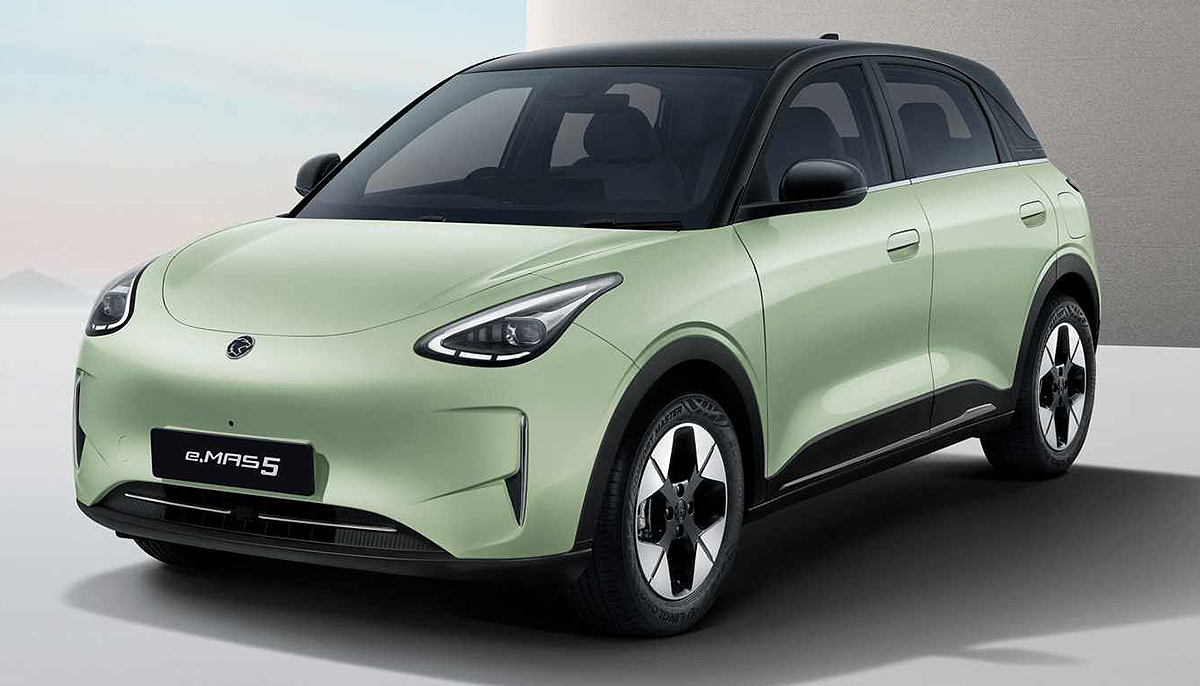
The Proton e.MAS 5 is the largest EV in this comparison, measuring 4,135 mm in length, 1,805 mm in width, and 1,580 mm in height, with a 2,650 mm wheelbase.
Its larger footprint gives it a stronger road presence compared to both rivals. It also offers the most practical storage package with a 375-litre boot and an additional 70-litre front trunk (frunk).
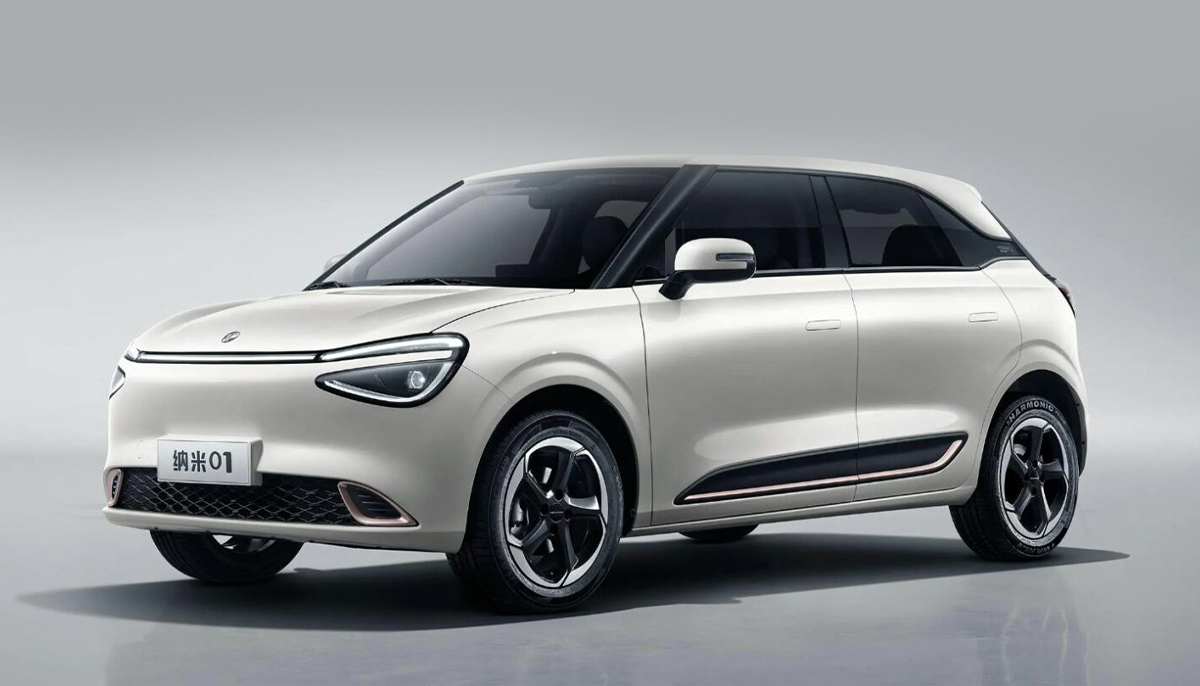
The Dongfeng Nammi Box measures 4,020 mm in length, 1,810 mm in width, and 1,570 mm in height. It has the longest wheelbase among the three at 2,660 mm, which is slightly longer than the Proton e.MAS 5. It also has the highest claimed ground clearance at 176 mm.
The BYD Atto 1 is the most compact model, measuring 3,825 mm in length, 1,720 mm in width, and 1,590 mm in height, with a 2,500 mm wheelbase. Its smaller dimensions make it the easiest to navigate through crowded city streets.
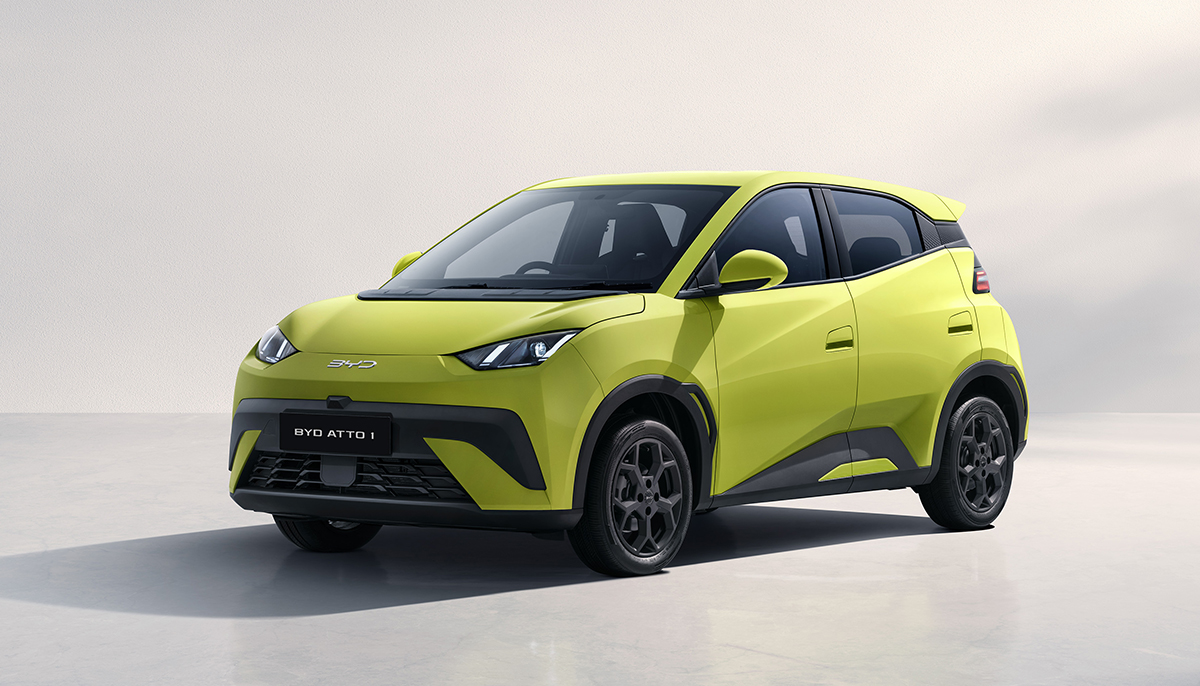
In terms of ground clearance, the Proton e.MAS 5 and BYD Atto 1 offer a claimed 175 mm, while the Nammi Box offers 176 mm. The difference is minimal, and all three EVs are designed to handle everyday urban roads and occasional rough surfaces.
The Nammi Box Plus variant has also been mentioned with a ground clearance figure of 186 mm in the company’s social media posts. However, this figure is not currently listed on the official website or technical specifications, so buyers are advised to verify the exact specification with the authorised dealer before purchase.
Note: Ground clearance figures are based on manufacturer-provided specifications. Actual ground clearance may vary depending on measurement methods, tyre size, vehicle load, tyre pressure, and road conditions. Buyers are advised to confirm the exact ground clearance with the respective authorised dealer before purchase.
Powertrain & Driving Dynamics
This is where the Proton e.MAS 5 creates the biggest difference.
Unlike the BYD Atto 1 and Dongfeng Nammi Box, which use a front-wheel-drive layout, the e.MAS 5 comes with a Rear-Wheel-Drive (RWD) setup combined with an independent multi-link rear suspension.
The Proton e.MAS 5 is available with two battery options — 30.12 kWh and 40.16 kWh. The smaller battery version produces 58 kW (78 hp), while the larger battery version produces 85 kW (114 hp) and 150 Nm of torque. It also claims impressive acceleration, reaching 0-50 km/h in just 3.9 seconds with the larger battery.
The BYD Atto 1 comes with 30.08 kWh and 39.88 kWh battery options, producing 45 kW (60 hp) and 125 Nm of torque. Its compact size and smooth power delivery make it well suited for city driving.
The Dongfeng Nammi Box offers 31.4 kWh and 42.3 kWh battery options, with power outputs ranging from 49.5 kW (66 hp) to 70 kW (94 hp) and up to 160 Nm of torque.
When it comes to charging, the Proton e.MAS 5 takes the lead. It supports 30-80% DC fast charging in around 21 minutes, compared to around 30 minutes for both the BYD Atto 1 and Nammi Box.
For Nepal’s roads, especially hilly routes, Proton’s RWD architecture and multi-link suspension could provide an advantage in terms of handling and stability.
Exterior Design & Features
The three EVs follow completely different design philosophies.
The Dongfeng Nammi Box is the most style-focused model. Its biggest highlights are the frameless doors and hidden flush door handles, giving it a premium and futuristic appearance usually seen in more expensive vehicles.
The BYD Atto 1 follows a compact and practical city-car approach. Its smaller footprint makes it ideal for urban use, while its design carries BYD’s modern EV identity.
The Proton e.MAS 5 takes a balance between futuristic styling and everyday practicality. It features semi-concealed door handles, a dual-tone roof option, heated ORVMs, and a powered tailgate, adding convenience to daily use.
Interior & Technology
Inside the cabin, the Proton e.MAS 5 makes a strong statement.
The biggest highlight is its 14.6-inch FHD touchscreen, which is the largest display among these three EVs. The system supports wireless Apple CarPlay and Android Auto and runs on Proton’s ATLAS OS. The e.MAS 5 also features an 8.8-inch digital instrument cluster, wireless charging, and rear AC vents, making it more practical for family use.
The BYD Atto 1 features BYD’s signature 10.1-inch rotating touchscreen, allowing users to switch between portrait and landscape orientation. It also supports wireless smartphone connectivity.
The Dongfeng Nammi Box focuses more on comfort. Depending on the variant, it offers features such as heated and ventilated seats, memory functions, and front seats that fold flat to create a lounge-style Rest Mode.
While Proton leads in screen size and practicality, Nammi Box stands out for comfort-focused features.
Safety
Safety has become an increasingly important factor for EV buyers, and all three models bring modern safety equipment.
The Proton e.MAS 5 comes with six airbags, ESC, TPMS, ISOFIX mounts, and a 360-degree camera with 3D view. The Premium variant also gets a Level-2 ADAS suite, including: Autonomous Emergency Braking (AEB), Forward Collision Warning (FCW), Lane Departure Warning (LDW) and Adaptive Cruise Control
The BYD Atto 1 also offers six airbags, stability control, TPMS, and ISOFIX, backed by BYD’s strong battery safety reputation.
The Dongfeng Nammi Box offers safety features depending on the variant, with higher trims offering Level-2 ADAS technology.
Price Comparison
The Proton e.MAS 5 enters one of the most competitive price segments in Nepal.
The Proton e.MAS 5 Prime variant is priced at Rs. 29.99 lakh as a launch special, while the original price is Rs. 32.99 lakh. The Proton e.MAS 5 Premium variant is available at Rs. 34.99 lakh as a launch special, compared to its original price of Rs. 36.99 lakh.
The BYD Atto 1 Dynamic variant costs Rs. 29.75 lakh, while the BYD Atto 1 Premium variant is priced at Rs. 33.80 lakh, while the Dongfeng Nammi Box E2 variant is priced at Rs. 32.49 lakh, while the higher-spec Nammi Box E3 costs Rs. 36.25 lakh.
With its aggressive pricing, Proton has positioned the e.MAS 5 directly against the most popular EV choices in Nepal.
Verdict: Can Proton Change the EV Game?
The Proton e.MAS 5 has not just entered the Rs. 35 lakh EV segment — it has raised the benchmark for what buyers should expect.
Previously, buyers in this segment often had to compromise between price, features, and performance. Proton has attempted to combine all three by offering premium technologies such as RWD architecture, multi-link suspension, advanced safety systems, fast charging, and impressive practicality.
Choose the Proton e.MAS 5 if:
- You want better driving dynamics and RWD performance
- You want maximum practicality with boot space and frunk
- You prefer advanced technology and safety features
- You want a more premium EV experience
Choose the BYD Atto 1 if:
- You want a compact city-friendly EV
- You trust BYD’s battery technology and ownership experience
- You want a proven EV from an established brand
Choose the Dongfeng Nammi Box if:
- You want a unique and premium-looking design
- You value comfort features like ventilated seats
- You want a more lifestyle-oriented EV
The real impact of the Proton e.MAS 5 is not just its entry into the market, but the expectations it creates. It has shown that buyers in the sub-Rs 35 lakh segment no longer have to settle for a basic EV — they can now demand technology, practicality, safety, and a better driving experience.
Disclaimer: This comparison is based on officially available specifications, features, and pricing provided by the respective manufacturers and authorised distributors. It is a paper-based comparison and does not represent real-world testing or ownership experience. Actual performance, range, charging time, ride quality, and practicality may vary depending on driving conditions, road conditions, weather, vehicle load, and usage patterns.




Changan Nevo Q05 Delivered to Five Nepali Celebrities

Omoda Jaecoo Continues Nepal Premier League Partnership for 2026